Whole-Plant Power: How Cannabis Topicals Go Way Beyond CBD for Real Skin Results
Your Skin Deserves More Than a Single Ingredient
Walk into any dispensary or wellness shop in California, Colorado, or New York these days, and you'll find shelves stacked with cannabis-infused lotions, balms, serums, and salves. Most of them slap "CBD" in big letters on the front. And while CBD is genuinely useful for skin health, leaning on it as the sole selling point is kind of like buying a smoothie for just one ingredient when the whole blend is what makes it work.
That's the heart of what researchers and formulators are increasingly calling the "whole-plant" or "full-spectrum" approach to cannabis topicals. The cannabis plant produces over 100 cannabinoids and more than 200 terpenes, and growing evidence suggests these compounds work better together than any single molecule does alone. For your skin specifically, that synergy can translate into real, noticeable results — if you know what to look for.
The Entourage Effect, Explained for Your Skin
You may have heard the term "entourage effect" in the context of smoking or edibles — the idea that cannabinoids and terpenes amplify each other's effects when consumed together. The same principle applies topically, though the mechanism is a little different since most cannabis compounds applied to the skin don't enter the bloodstream in meaningful amounts.
Instead, they interact with the endocannabinoid system (ECS) receptors — specifically CB1 and CB2 receptors — that exist right in your skin cells, including keratinocytes, sebocytes (the cells that produce sebum), and immune cells in the dermis. When multiple cannabinoids and terpenes hit these receptors simultaneously, the effect isn't just additive. Some compounds enhance receptor sensitivity, others reduce inflammation through entirely separate pathways, and still others provide antimicrobial or antioxidant activity that CBD alone simply can't replicate.
Think of it less like a solo performer and more like a full band.
Meet the Supporting Cast: Cannabinoids Beyond CBD
CBD gets the headlines, but several other cannabinoids are quietly doing heavy lifting in well-formulated topicals:
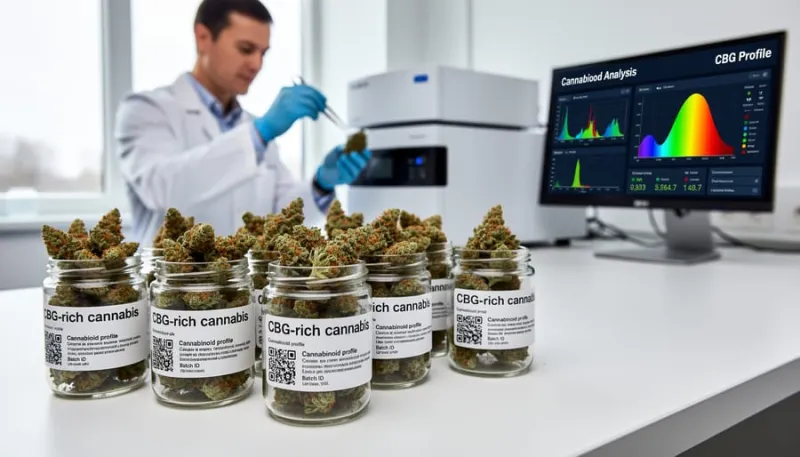
CBG (Cannabigerol): Often called the "mother of all cannabinoids" because other cannabinoids derive from it, CBG is showing serious promise for acne-prone skin. Early research suggests it has potent antibacterial properties — in one study, it outperformed CBD against certain bacterial strains — and it appears to regulate sebum production, which is a root cause of breakouts.
CBC (Cannabichromene): This lesser-known cannabinoid is generating buzz in dermatology circles for its potential role in supporting healthy skin cell turnover. Some preliminary research links CBC to reduced sebaceous gland inflammation, making it a candidate for combination acne and anti-aging formulations.
CBN (Cannabinol): Typically associated with sleep when ingested, CBN in topical form appears to have meaningful anti-inflammatory and analgesic properties. Brands like Papa & Barkley have leaned into CBN-forward balms for localized pain and skin irritation, with solid consumer feedback to back it up.
THC (Tetrahydrocannabinol): Yes, even a small amount of THC in a topical can enhance the overall effect — particularly for pain relief and deep inflammation — without producing any psychoactive experience, since transdermal absorption at topical concentrations is negligible for most formulations (transdermal patches are a different story).
Terpenes: The Aromatics That Actually Do Work
Terpenes aren't just responsible for how cannabis smells. In skincare, they serve real functional roles:
- Linalool (also found in lavender) has documented anti-inflammatory and calming properties, making it a natural fit for sensitive or reactive skin types.
- Myrcene is a potent antioxidant and may enhance skin permeability, helping other active compounds penetrate more effectively.
- Limonene offers antifungal and antibacterial benefits and has shown some evidence of brightening effects on the skin.
- Beta-caryophyllene is particularly exciting because it's one of the only terpenes known to directly bind to CB2 receptors — essentially acting like a cannabinoid — which makes it especially relevant for inflammatory skin conditions like eczema and psoriasis.
When terpenes are preserved in a full-spectrum extract rather than stripped out (as they are in CBD isolate products), the skincare formulation becomes dramatically more complex and potentially more effective.
Reading Labels: Full-Spectrum vs. Broad-Spectrum vs. Isolate
Not all cannabis topicals are created equal, and the terminology on labels matters:
- Full-spectrum: Contains all naturally occurring cannabinoids and terpenes from the plant, including trace amounts of THC (under 0.3% in hemp-derived products). This is generally the gold standard for the entourage effect.
- Broad-spectrum: THC has been removed, but other cannabinoids and terpenes remain. A solid middle-ground option if you're in a state where any THC in topicals raises concerns.
- Isolate: Pure CBD (or another single cannabinoid) with everything else removed. The most common type on mainstream shelves, but also the least likely to deliver synergistic benefits.
Brands like Vertly, Saint Jane, and Leef Organics have built reputations around full-spectrum and broad-spectrum formulations with transparent ingredient sourcing. When shopping, look for a Certificate of Analysis (COA) from a third-party lab — any brand worth your money will have one readily available.
Skin Conditions Where Whole-Plant Topicals Show Real Promise
Inflammation and redness: The combination of CBD, beta-caryophyllene, and linalool creates a multi-pathway anti-inflammatory response that single-ingredient products can't match.
Acne: CBG's antibacterial action paired with CBC's sebum regulation and CBD's general anti-inflammatory effects make full-spectrum formulations a compelling option for acne-prone consumers.
Aging and oxidative stress: Myrcene, limonene, and CBD all contribute antioxidant activity, helping neutralize free radicals that accelerate visible aging.
Eczema and psoriasis: Beta-caryophyllene's direct CB2 receptor activity, combined with CBD's well-documented role in reducing skin inflammation, makes whole-plant balms worth exploring as a complementary approach alongside conventional treatment.
The Bottom Line
The cannabis plant didn't evolve to produce one useful compound — it produces hundreds. The most effective topical formulations are finally starting to reflect that reality. Whether you're dealing with chronic skin inflammation, stubborn breakouts, or just want a more effective daily moisturizer, reaching for a full-spectrum or broad-spectrum product gives your skin access to the full toolkit the plant has to offer.
Next time you're browsing topicals at your local dispensary or online wellness retailer, flip the bottle around. Check the spectrum, scan for a COA, and look beyond the CBD percentage. Your skin is more sophisticated than a single-ingredient fix — and the best cannabis topicals are catching up.