You Feel Unstoppable. Your Fitness Tracker Disagrees. Here's Why Both Are Right.
The Gym Paradox Nobody Talks About
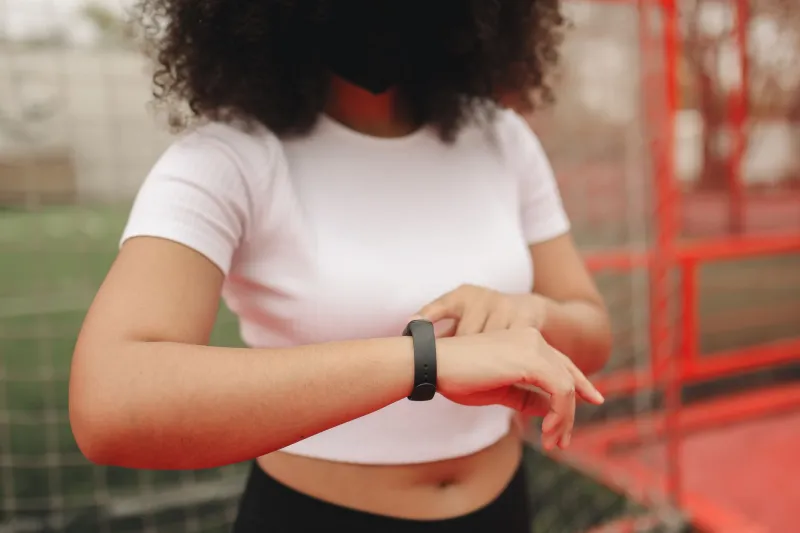
You finish a run feeling like you absolutely destroyed it. Your legs were fluid, your breathing felt effortless, and you were locked in for every single mile. Then you sync your watch and stare at the screen. Your pace was slower than last week. Your heart rate was higher. Your power output was down.
So what gives?
For cannabis consumers who work out, this experience isn't rare — it's almost a rite of passage. The subjective sense of physical enhancement that can come with a pre-workout session is real and consistent enough that athletes talk about it constantly. But the objective data? It frequently tells a different story. Understanding why both of those things can be simultaneously true is one of the more fascinating puzzles sitting at the intersection of cannabis science and exercise physiology.
What Cannabis Actually Does to Your Brain During Exercise
To make sense of this disconnect, you have to start with proprioception — your body's internal GPS system. Proprioception is how your nervous system tracks where your limbs are in space, how much force your muscles are generating, and how your body is moving relative to itself. It's the reason you can walk in the dark without falling over, or catch a ball without staring at your hand.
Cannabinoids, particularly THC, interact directly with the endocannabinoid system in ways that can significantly alter proprioceptive feedback. Research has shown that CB1 receptors — the primary targets of THC — are densely distributed in areas of the brain responsible for motor control, sensory processing, and body awareness. When those receptors get activated, the signals your brain receives from your muscles and joints can feel amplified, more vivid, and more precise.
The result? You feel more connected to your body. Movements that might normally feel mechanical or effortful can start to feel smooth and intentional. That sensation of being "in the zone" isn't imaginary — it's a genuine neurological shift in how your brain is interpreting physical input.
The problem is that feeling more connected isn't the same as performing better.
The Confidence Factor
There's another layer to this that doesn't get enough attention: cannabis and perceived exertion. Multiple studies have looked at how cannabis affects ratings of perceived exertion (RPE) — essentially, how hard exercise feels at a given intensity. The findings are pretty consistent. Cannabis tends to lower RPE, meaning the same workload feels easier than it would sober.
For endurance athletes especially, this sounds like a superpower. If a seven-minute mile feels like a six-minute mile effort, shouldn't you just… run faster? Not exactly. Lower perceived exertion doesn't translate to increased physical output. Your cardiovascular system, your muscles, your oxygen uptake — none of those are fooled by a shift in perception. They're operating at whatever level your actual fitness allows. Cannabis can make the ceiling feel higher without actually raising it.
That confidence bump is real, though, and it matters. Athletes who've incorporated cannabis into their training often describe a kind of mental unlocking — less self-doubt mid-rep, less hesitation before a heavy lift, more willingness to push through discomfort. Whether that translates to better outcomes over time is a different question, and the research is still catching up.
What the Data Actually Shows
Here's where it gets genuinely complicated: the objective performance research on cannabis and exercise is all over the place, and a lot of it is outdated or methodologically limited. Most of the older studies used smoked cannabis in lab settings that didn't reflect how real people actually train. Dosing was inconsistent. Fitness levels of participants varied wildly.
What we do know with reasonable confidence:
- Acute THC consumption tends to impair reaction time and coordination, particularly in complex movement patterns. If your sport requires split-second decision-making or technical precision, this is a meaningful disadvantage.
- Endurance metrics are mixed. Some studies show no significant change in VO2 max or time-to-exhaustion; others show modest decreases. Nobody is showing dramatic improvements.
- Strength and power output — the kind measured in a squat rack or on a force plate — doesn't appear to increase with cannabis use. Perceived effort during those lifts may decrease, but the numbers on the bar don't magically go up.
- Recovery is where cannabis research gets more promising, particularly around sleep quality, inflammation, and muscle soreness — but that's a separate conversation from in-session performance.
So Why Do Athletes Keep Using It?
Because the lived experience of working out with cannabis isn't reducible to a spreadsheet of performance metrics, and most athletes aren't trying to break world records in their Tuesday evening gym session.
For a lot of people, cannabis makes movement more enjoyable. It quiets the mental noise that turns a 45-minute run into a negotiation with your own brain about whether you'd rather be on the couch. It can make the repetitive grind of a strength program feel more meditative. It can turn a solo bike ride into something that feels genuinely restorative rather than just a calorie-burning obligation.
Those aren't small things. Consistency is the single most important variable in any fitness program, and if cannabis helps someone actually show up and enjoy the process, that has real long-term value even if their one-rep max isn't climbing faster.
Jake M., a 34-year-old recreational runner from Portland, put it plainly: "My Garmin doesn't care that I felt amazing out there. But I ran four times this week instead of two, and I actually wanted to go back out. That's not nothing."
Reading Your Own Data More Honestly
If you're a cannabis consumer who tracks your workouts, here's the practical takeaway: don't let the subjective glow of a great session trick you into misreading your progress, but don't let the data gaslight you into ignoring the value of how you feel either.
A few things worth tracking alongside your usual metrics:
- Consistency over time. Are you showing up more often? That matters.
- Enjoyment ratings. Seriously. Log how much you actually liked the workout. Sustainable fitness depends on this.
- Technical quality. Video yourself occasionally. Sometimes cannabis improves form by slowing you down and making you more deliberate; sometimes it introduces sloppiness you can't feel in the moment.
- Recovery windows. Track soreness, sleep quality, and readiness scores in the days after sessions where you used cannabis versus those where you didn't.
The Bottom Line
The cannabis fitness paradox is real, and it's not going away just because it's inconvenient. You can feel stronger, more capable, and more in tune with your body — and also be measurably performing at a lower level than your sober baseline. Both things are neurologically valid. The question is what you're actually optimizing for.
If peak athletic performance is the goal, cannabis probably isn't your pre-competition tool. If sustainable, enjoyable movement that you'll actually stick with is the goal, the calculus gets a lot more nuanced. Know what you're chasing, read your data honestly, and don't let either the high or the numbers tell the whole story on their own.